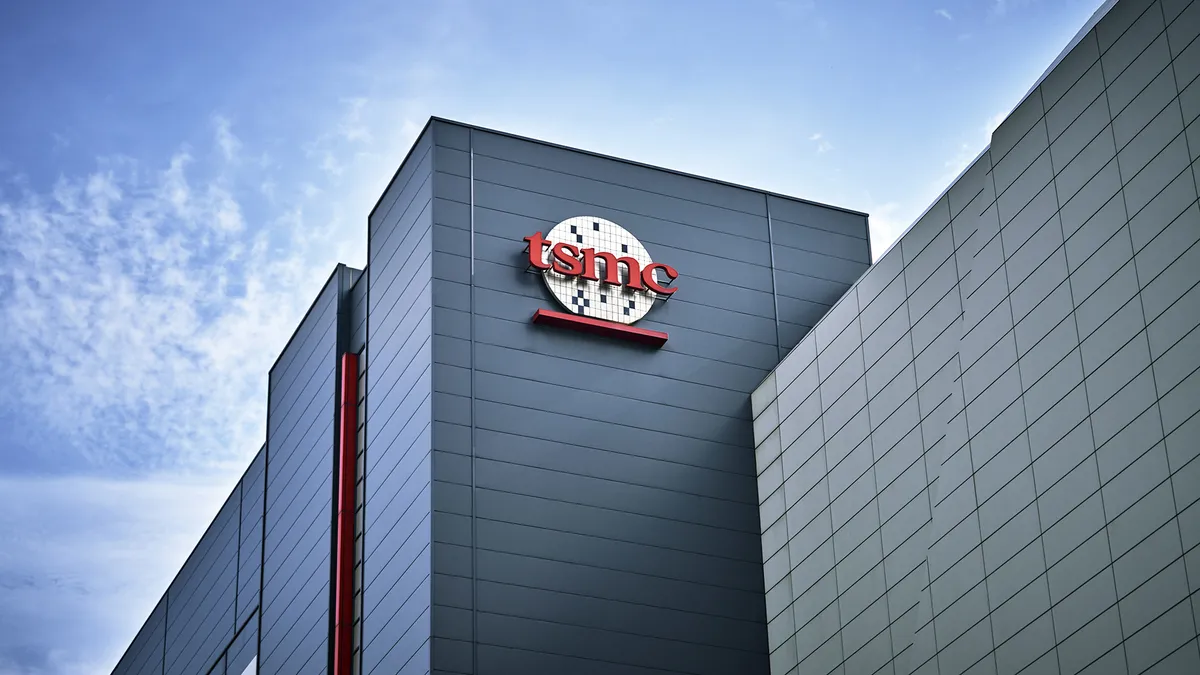
TSMC, the world's biggest chipmaker, has another process node which will almost certainly, amongst an undoubted slew of AI chips, be used to make some of our gaming GPUs and CPUs in the future. This next-gen process is 'A14', meaning 14 angstroms or 1.4 nanometres or really, really small.
This was announced yesterday at TSMC's North America Technology Symposium, and the company says the process "is designed to drive AI transformation forward by delivering faster computing and greater power efficiency."
Although it's a few years away, I can't help but get a little excited about new processes. That's primarily because we've seen with the RTX 50-series GPUS just how unexciting a new GPU generation can be if it doesn't come off the back of ufa888 a new process node (the RTX 50 series is on the same process as the RTX 40 series).
That being said, Nvidia doesn't usually use bleeding-edge nodes for its GPUs, and we'll be more likely to see AMD and Apple chips made using A14 to begin with.
A14 won't have backside power delivery until 2029, either, according to our colleagues at . Backside power delivery essentially moves power interconnects to the underside of the chip, reducing inference and the distance that power has to travel, thereby increasing efficiency and performance.

: The top chips from Intel and AMD.
: The right boards.
: Your perfect pixel-pusher awaits.
: Get into the game ahead of the rest.
We expect to see backside power delivery (AKA 'Super Power Rail') from TSMC in 2026. Intel's ahead in this game, however, as its 18A process already has backside power delivery and is as of two months ago.
As for whether this A14 production will also make an appearance in the US, as well as from TSMC's Taiwan fabs, it seems like it might. I'm basing this on the company's recent , in which the company claimed that six fabs are planned in Arizona: "In that six fab, the 2-nanometer will be a major node, and that's what I say, 30% will be there. As time goes by, after the 2-nanometer will be 1.4 and 1.0, that has not been discussed yet."
This was in response to a question about what percentage of future leading nodes will come from the US vs from Taiwan, and to my ears it seems like TSMC is saying 1.4 and 1.0 will come from the US, but the percentage hasn't been discussed yet.
Whatever the case, here's to some healthy progress in process nodes across the board, whether from TSMC, Intel, or anyone else. Architectural and AI changes aside, raw performance increases are a direct result of transistor density, and we can all get behind that.
SpinQueen8786
The mobile interface is smooth and intuitive. I can play all my favorite slots on the go without experiencing any lag or glitches. The design is responsive and user-friendly, which makes gaming on my phone just as enjoyable as on my computer. Customer support has been outstanding whenever I had any issues. They respond quickly and professionally, ensuring that any concerns with deposits, withdrawals, or gameplay are addressed immediately, which makes me trust the platform more. I love the overall aesthetic of the platform. The animations, visual effects, and sound design make the gaming experience more dynamic and immersive. It's one of the reasons I keep coming back.